Mystery or Thriller: Where Does the Suspense Come From?
Mystery or thriller? Learn how each genre creates suspense, guides your attention, and changes what you expect from the next scene.
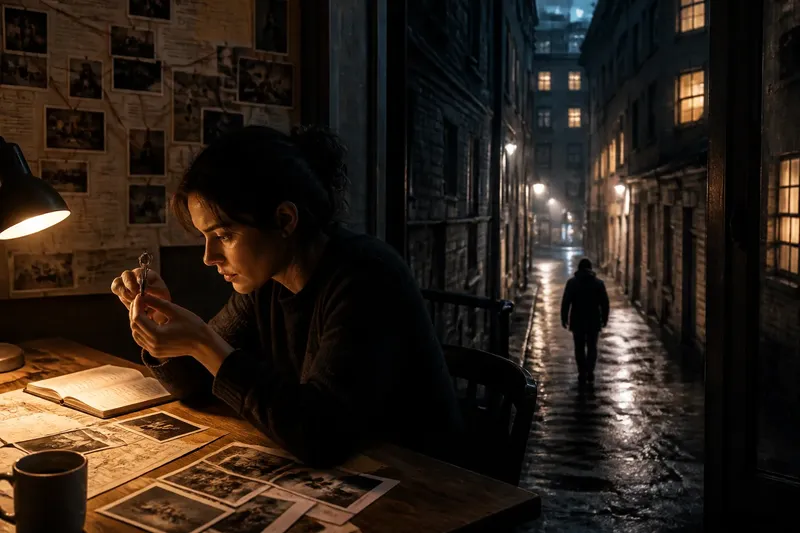
The most common mistake in calling a film a mystery or a thriller is to treat every tense scene as proof of one genre. That can blur the pleasure each offers: a mystery asks you to work out what happened, while a thriller makes you wonder what will happen next. The distinction is useful because it tells you where to direct your attention.
What separates mystery and thriller suspense?
Mystery suspense usually grows from missing knowledge about a past event: who committed a crime, what caused a disappearance, or why someone is lying. The film supplies clues, competing accounts, and gaps in the record. Your attention turns backward, toward a hidden explanation.
Thriller suspense usually grows from an approaching possibility: a character may be discovered, a plan may fail, or danger may arrive before help does. The film makes you look ahead and anticipate consequences. You might know who is responsible and still feel tense because you do not know what they will do next.
These are different centers of gravity, not rigid boxes. A mystery can contain a chase, and a thriller can conceal an identity. To classify the experience, ask which unanswered question keeps the story moving: “What happened?” or “What happens now?”
What question drives a mystery?
A mystery’s central question points toward an explanation. The opening may present a body, a theft, a vanished person, or a contradiction in someone’s story. The plot then organizes evidence so that the audience can revise its account of events.
Clues may be objects, behavior, timing, or language. A wet coat could suggest an unexplained trip; a witness who remembers a detail too precisely might seem suspicious. Neither clue has a fixed meaning by itself. Its value depends on what the film later reveals and how it fits with the rest of the evidence.
The pleasure is not simply guessing correctly. A strong mystery lets you compare explanations, notice how assumptions shape your reading, and understand why an answer fits better than its rivals. The reveal can change the meaning of earlier scenes without making them feel arbitrary.
What question drives a thriller?
A thriller’s central question points toward a looming outcome. A character is being watched, a secret is about to surface, or two people are heading toward a confrontation. The audience may understand the danger well before the character does, which creates tension through that gap in awareness.
Thrillers often make time and exposure feel pressing. A phone keeps ringing while a character hides; an elevator approaches the floor where someone is waiting; a witness has to decide whether to speak before a pursuer arrives. The scene’s suspense comes from the narrowing options and the likely cost of each choice.
Here, uncertainty need not concern the culprit. You can know exactly who poses the threat and still be unsure whether the protagonist will escape, persuade an ally, or make matters worse. The next action matters more than reconstructing the past.
How do films guide your attention?
Mystery and thriller screen language can overlap, but each tends to direct attention toward a different kind of information. A mystery may hold on a face after a suspicious remark, return to an object in a new context, or let one witness’s account contradict another. These choices encourage you to inspect details and compare versions.
A thriller may emphasize distance, barriers, or an approaching sound. A long view down a corridor can make you scan for movement; a close view of a character’s hand can make a small hesitation feel consequential. Editing may delay showing who entered a room, or cut between a character and a threat moving closer.
Think of the difference as using a map versus watching a door. A mystery invites you to piece together where the story has been; a thriller keeps you alert to what may cross into the scene. The analogy is not a rule, but it helps identify what a moment is asking you to do as a viewer.
Can a film be both?
Yes. Many films combine a mystery’s concealed explanation with a thriller’s immediate danger. The genre label often reflects which question dominates the viewing experience, rather than every device the film uses.
Imagine a fictional film in which a courier finds an altered key beside an empty apartment, then receives a message warning them to leave town before nightfall. The key and the apartment invite the question of who entered and why; the warning turns attention toward whether the courier can get away safely. If each new scene mainly uncovers the apartment’s history, the film leans toward mystery; if it mainly tightens the courier’s predicament, it leans toward thriller.
A story can also change emphasis. The first part may build an investigation, while the final stretch shifts into pursuit once the explanation becomes clear. That change does not make the earlier section a different kind of film; it changes what the audience is waiting to learn.
How do reveals change suspense?
In a mystery, a reveal answers a question that has organized the clues. Its fairness depends on whether the audience could, at least in principle, make sense of the evidence. A reveal can surprise you while still allowing you to look back and see how the pieces fit.
In a thriller, suspense can survive a reveal because the danger remains active. Learning who set a plan in motion may create a sharper question: can the protagonist stop it? The answer to one uncertainty becomes the starting point for another.
Notice what a reveal actually resolves. If it explains an earlier event but leaves a character in immediate danger, the film has closed a mystery question while preserving thriller suspense. If it ends the looming threat but leaves the cause obscure, the balance may run the other way.
Which genre should you choose?
Choose a mystery if you enjoy tracking clues, testing testimony, and revising your theory as new information appears. It may suit a viewer who likes to pause after a reveal and reconsider the details that seemed unimportant at first.
Choose a thriller if you prefer urgent decisions, exposed vulnerabilities, and the uncertainty of an outcome still taking shape. It may suit a viewer who wants each scene to feel like it could close off an escape or bring a threat nearer.
If you enjoy both, look for the balance promised by the setup. A missing-person story may become a pursuit; a crime investigation may turn dangerous once the investigator gets close to an answer. The useful question is not just which label appears on a film listing, but which kind of suspense you want to follow.
What should you watch for?
What is the central unanswered question?
Listen for whether the story asks you to explain an event or predict an outcome. The wording of that question often reveals the film’s main source of suspense before the plot supplies an answer.
Who knows more, the character or the audience?
If you have clues a detective lacks, the film may be inviting you to solve alongside them. If you know a threat is approaching while a character remains unaware, suspense may come from waiting for the danger to be recognized.
What changes after a new clue?
In a mystery, a clue often changes your account of the past or the people involved. In a thriller, new information may change what a character can do next, making a decision or escape more urgent.
What does the ending settle?
Ask whether the ending explains the hidden event, resolves the immediate danger, or does both. That answer helps you see whether the film’s lasting satisfaction comes from understanding the past or watching a threatened future take shape.
For a quick read of mystery or thriller suspense, follow the question that stays alive between scenes. If each answer makes the past more legible, you are mainly watching a mystery; if each answer makes the next move more urgent, you are mainly watching a thriller. That small distinction can make a second viewing richer, because you can notice not only what the film hides but how it teaches you to wait.